
The analysis revealed abrupt changes in temperatures occurring in late winter across north India.

Delhi's peak power demand reached an all-time high of 8,302 MW on Wednesday afternoon as the city logged its highest-ever temperature of 52.3 degrees Celsius at the Mungeshpur weather station.

Parts of the capital woke up to dense fog on Friday with the mercury dropping to 7.4 degrees Celsius, one degree below the season's average.
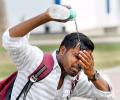
Heatwave conditions have been prevailing in Odisha since April 15 and the Gangetic West Bengal since April 17, according to the MeT department.

The independent group of scientists and communicators previously said that winters are quickly transitioning into summer-like conditions in north India, shortening the spring season.

'We have not even used 0.1% of the available resources.'

Cold-day conditions prevailed in parts of north India on Friday though the maximum temperatures rose slightly amid clear skies and sunshine during the day.

Vast swathes of the country continued to reel under intense heat, with capital Delhi witnessing its hottest day in a decade for the month of May with a record-breaking 45.7 degrees Celsius.

Virat Kohli's conduct came under the microscope in the Boxing Day Test in Melbourne on Thursday after a clash of shoulders with teen debutant Sam Konstas, but the incident did little to knock the Australian wonder boy off his stride.

The heat index in major metro cities in the country has majorly risen since 2010 compared to a decade earlier.

Delhi's air quality deteriorated significantly on Monday, with areas like Dwarka, Mundka and Najafgarh recording an AQI of 500, the worst this season. The city's overall AQI reached 491, triggering the implementation of the Graded Response Action Plan (GRAP) Stage-IV restrictions in Delhi-NCR. Doctors warned of health risks, urging people to wear N95 masks and avoid outdoor activities. The Supreme Court questioned the Delhi government on its anti-pollution measures and warned against scaling down preventive measures without its permission. Delhi Chief Minister Atishi accused the BJP-led central government of political maneuvering while neglecting stubble burning in states it governs. Meanwhile, the city enforced stricter pollution control measures, including a ban on truck entry and suspension of construction activities. Air purifier sales surged, reflecting the public's concern over the severe air pollution.

Temperatures in 17 locations breached 48 degrees Celsius on Monday, with the relentless heat affecting health and livelihoods across large parts of northwestern and central India.

It said Delhi is facing an unprecedented heatwave with temperatures hovering around 50 degrees Celsius in some parts for the first time in the city's history.

IMD officials said the maximum temperature in the three districts could go up to 38 degrees Celsius.
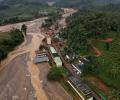
The deadly landslides in Kerala's ecologically fragile Wayanad district were triggered by a heavy burst of rainfall, made 10 per cent heavier by climate change, according to a new rapid attribution study by a global team of scientists.

Delhi on Tuesday recorded the coldest day of the year so far at 4 degree Celsius, four notches below normal, even as dense fog led to cancellation of 13 trains.
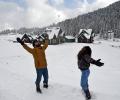
Gulmarg was the coldest place in Kashmir on Sunday.

After a long and harsh spell of heatwave, Delhi witnessed a pleasant morning on Thursday, with the weather department saying parts of the national capital received light rains.

The city's 24-hour Air Quality Index, recorded at 4 pm every day, stood at 418, up from 334 the previous day, and it may trigger stringent restrictions under the third stage of the graded response action plan to mitigate hazardous conditions.

A thick layer of fog was seen in several parts of the city, weather officials said.

>Bihar (18 days) has the most number of heatwave days in 2023, followed by Andhra Pradesh (15 days), Odisha (15 days), Jharkhand (13 days), West Bengal (8 days) and Tamil Nadu (6 days).

Fourteen people, including 10 polling personnel, have died due to heatstroke in Bihar in the last 24 hours, officials said on Friday afternoon.

Mercury breached the 45 degree Celsius mark on Friday in the national capital, a day after the city witnessed the hottest day of the season with the maximum temperature being recorded at 44.7 degree Celsius.

'You don't realise your life has changed in just three days.' 'It's when you come back to the city that it starts hitting you but you now have the power to manage the challenges Life throws at you.'

As many as 720 roads, including four national highways, in Himachal Pradesh are blocked following snow while 2,243 transformers are disrupted.

Images from Day 7 of the 2025 Australian Open at Melbourne Park on Saturday.

Public sector Oil India Ltd has declared an emergency and called for global fire extinguishing experts to control a blaze that broke out on Thursday in one of its wells at Dikom in Upper Assam.

'Whatever you do will spark controversies, so it is best do what your heart tells you to do. Simple.'

Athletes and climate experts have expressed concerns that extreme heat could lead to severe health issues, including the risk of sportspeople collapsing or, in the worst-case scenarios, dying during the events.

Temperatures in 17 locations breached 45 degrees Celsius on Monday, with the punishing heat affecting health and livelihoods.

'Dense' to 'very dense' fog prevailed in parts of Punjab, Haryana, west Rajasthan, Bihar, Delhi, west Uttar Pradesh, Jharkhand, Odisha and Assam.

More than 80 per cent of Indians live in districts vulnerable to climate risks. Among these, Assam, Andhra Pradesh, Maharashtra, Karnataka, and Bihar are the most vulnerable states to extreme climate events.

Intense heat swept through east India and parts of the southern peninsular region on Thursday, testing power grids and prompting the Kerala government to order closure of educational institutions till May 6.

The minimum temperature in Delhi was recorded at 28.6 degrees Celsius, according to the India Meteorological Department (IMD).

Heatwave conditions are expected over northwest India during the next five days, with Punjab, Haryana, Rajasthan and Delhi predicted to bear the maximum impact, the India Meteorological Department (IMD) said on Thursday.

Satellite imagery showed a dense elongated band of fog stretching from Punjab to the northeast.

Talks on global climate finance virtually ground to a halt last week at COP29, the annual United Nations (UN) Climate Change event in Baku, Azerbaijan, as the developed world, led by the European Union (EU), and developing countries including India, Brazil, South Africa, and a clutch of island nations and African countries faced a wide chasm between their expectations. This has raised doubts about whether an agreement can be reached this week or whether talks will spill over to COP30, to be held next year in Benem, Brazil.

Light to moderate rain in many areas with heavy rain at isolated places is likely to occur in West Bengal's coastal districts of North 24 Parganas, South 24 Parganas and Purba Medinipur.

Pollution levels in the Seine have raised health concerns for athletes participating in swimming events

Notwithstanding the sweltering heat engulfing major cities, travellers can find solace in the steady airfares to popular summer destinations like Srinagar, Bagdogra, and Kochi. According to airline executives, capacity increases and moderate demand have kept spot airfares from scorching cities like Delhi on a par with the same period last year.
